
by Denise Etheridge
Despite dimmed chances for federal funding, the White County Board of Commissioners voted to give the library project a green light during a called meeting on Monday.
The commission voted unanimously to use $3 million in state funds for design costs and to take out a six-year bond to pay for the remainder of the library’s construction. The county had initially sought $2 million in Congressionally Directed Spending funds through U.S. Sen. Jon Ossoff’s office.
“There’s so much turmoil in Washington right now I’m not going to hold my breath,” Commission Chairman Travis Turner said.
County Manager Derick Canupp had given commissioners three options.
One was to abandon the project, which the commission rejected outright, and two other options to acquire bonds but with different projected timelines. The option with the later start and completion dates would likely see increased construction costs, according to Canupp.
Commissioners decided to go with Canupp’s recommendation to break ground on a new library in fall 2026. The county would then take out an approximate $4.5 million bond after the county pays off the bonds for the Yonah Preserve project in January 2027. The library could then be completed in the spring of 2028, Canupp said.
Turner said the county can still continue to seek other funding sources, such as grants.
The current library
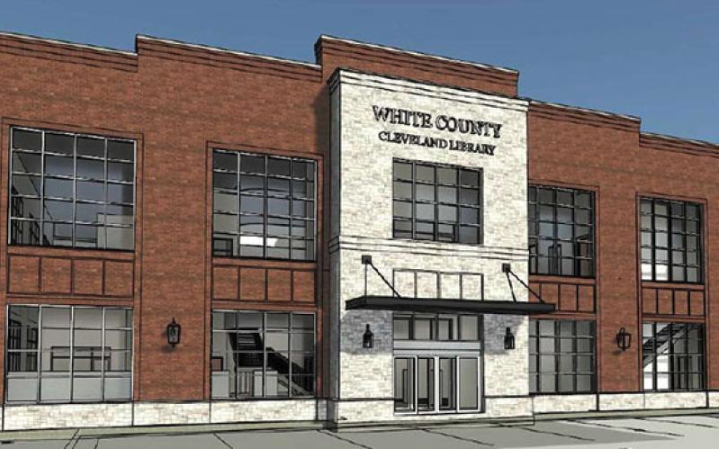
building in Cleveland is 6,000 square feet. The proposed new library in Cleveland would be a two-story, 20,000-square-foot building to be located on a lot behind the Tax Commissioner’s Office at 506 N. Main Street.
Plans include a separate space for story hour, space for tutors, a designated mail area, soundproof rooms for video conferences, a large children’s space with a separate activity room, a computer lab, and a community room that can hold up to 100 people.
In other county business, commissioners approved amendments to the county’s financial management policy.
Some of the changes will increase the county’s current purchasing thresholds, to better align with today’s rising costs for materials, equipment and services.
“This is inflation driven,” Turner said. “In today’s world, we’re all dealing with this with our own personal checkbooks.”
The changes would go into effect in early January 2026.
The commission also directed staff to draft a policy that could give preference to the hiring of local contractors when bidding out projects.