
Bee business buzzing in White County
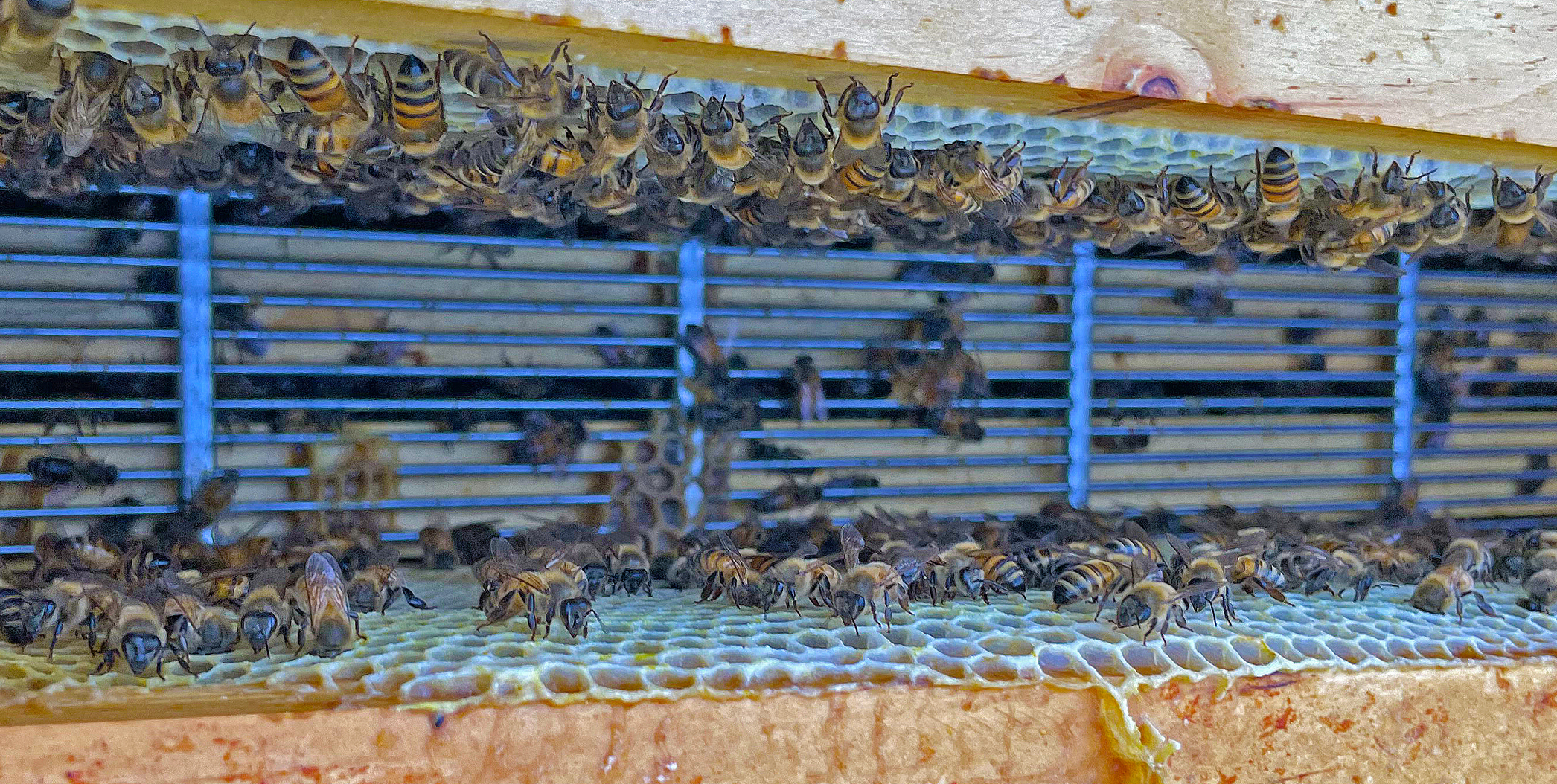

by Jerry Grillo
White County News
In the hills and hollers of Northeast Georgia, a sweet enterprise thrives as a collection of beekeepers takes care of the little pollinators and keeps store shelves stocked with local honey.
“Some of the best honey in the world is made in White County,” insists Gary Gailey, who has been tending bees since the 1960s.
While some of that local honey can be found in super markets, and some of it can be purchased online, or by private arrangement, the best your local correspondent has ever tasted was from a nickel-sized dollop on the open tailgate of a pickup truck.
“How much of a germaphobe are you,” asks beekeeper Rob Tuttle as he sticks a finger into the honey drop, which had fallen from the super he’d just stored in the truck bed — supers are the boxes that make up a beehive.
“How clean is your finger,” the correspondent asks, sticking a pinky into the clearish goo. It was
almost creamy, with notes of caramel, anise, maple. Pure sourwood honey, directly from Tuttle’s bees.
He currently manages about 55 bee colonies in several different White County locations. Gailey, who has been a mentor — a kind of Obi Wan Kenobi of beekeeping — for Tuttle and other local beekeepers, manages about 150 colonies. They sell their honey locally.
Meanwhile, Lloyd Allison of Allison’s Honey, based in White County for more than 40 years, manages a much larger hive. They’re three beekeepers in White County, part of a larger community of honey producers working on backyard plots and commercial-sized apiaries, working through pests and weather to foster the creation of sweet, viscous gold.
Mighty Mites
Allison’s family has roots in the area that go back 200 years. His grandfather was a dairy farmer. Now Allison makes mead from honey and wine from grapes, and honey-based lip balm, but it’s those jars of amber honey that keep him busiest. The company typically has 1,000 to 1,200 colonies going at more than 30 locations, some here in Northeast Georgia, some down in Dooley County.
Those bees make more than 100 barrels of honey a year — 70,000 pounds, give or take. You can buy it anywhere there is an Internet connection. It’s a lot to manage, and there are plenty of challenges to keeping all of those bees healthy, and that includes something of a vampire problem.
“One of the biggest challenges for all beekeepers is the varroa mite,” Allison says. “They were first detected in the United States around 1987 but I remember thinking, ‘well, we’re all the way up here in Northeast Georgia, we’re not gonna have any problem.’ How wrong I was!”
The varroa mite is a tiny parasite that feeds on bee blood. These pests, introduced in the U.S. from Asian honey bees, are a major factor in the decline of honey bee populations worldwide.
For Tuttle, who has been interested in beekeeping for almost 20 years, the mites have always been a fact of his bee life. Not so for Allison and Gailey, who have been keeping bees for many more years. Gailey recalls, “when I started, you could put bees in a box, they made honey, survived the winter, and did it again the next year. Mites didn’t exist.”
In spring 1989, following a winter mite infestation, pretty much all of his bees were dead. That was his first encounter with the little creeps, who have since developed a resistance to early treatments. Gailey now re-queens every colony each year — a costly but necessary practice — and uses vaporized acid and chemical strips to fight mites. He’s also bracing for the arrival of a new parasitic mite, already spotted in Canada and Europe.
“If it gets here, it’ll change everything again,” says Gailey, who has been hooked on beekeeping since watching a film about it as a third grader in 1968. His grandfather ordered some bees from Sears & Roebuck and young Gailey was soon off and buzzing.
Buzzing on the Side
Tuttle got into beekeeping after helping a friend extract honey about 20 years ago, and what started with two hives has become a passionate side business. He works full-time for AT&T, but on nights and weekends he’s tending bees, selling jars of honey at the Cleveland Farmers Market, and talking to customers — something he considers part of the job.
“I’ll say good morning to every single person,” says Tuttle, whose most popular seller at R&B Honey is a hot blend that uses peppers from his wife Beth’s garden. “Branding is super important.”
So is environment. Sourwood, blackberries, and wildflowers paint a nectar-infused floral map for Tuttle’s bees.
“We’re blessed here in this part of the world,” Tuttle says. “The diversity of nectar that we have around here has really kind of blown us away.”
Tuttle has a compact, immaculate honey room where he can take honey from framed honeycombs, and also renders by hand beeswax candles and salves. Allison, too, has expanded the use of his natural products — several years ago he added a meadery and winery to his property along Town Creek Road.
For Gailey, it’s all about the honey and keeping things manageable.
“I’ve had the same customers for over 30 years,” he says — most are his former colleagues at the Wrigley plant in Flowery Branch. He also sells honey at the Tomato House. “What we bottle comes straight from our own bee yards. No mixing.”
And he has some simple advice for anyone interested in knowing more about beekeeping, and possibly pursuing the sticky path of harvesting honey: “There’s a lot of great information out there, a lot of videos you can watch all day. But until you get your hands in a hive, you won’t really understand.”